%22%20d%3D%22M459%20412A256%20256%200%200%200%20456%2096L256%20256z%22%2F%3E%3Cpath%20fill%3D%22%23fff%22%20d%3D%22M123.2%2037.1a256%20256%200%201%200%20310.2%2034.3l-85%2088.5a133.4%20133.4%200%201%201-161.6-18z%22%2F%3E%3Cpath%20fill%3D%22url(%23b)%22%20d%3D%22M458.7%2099.6a256%20256%200%201%200%20.5%20312.1l-97.3-74.6a133.3%20133.3%200%201%201-.3-162.6z%22%2F%3E%3Cdefs%3E%3CradialGradient%20id%3D%22b%22%20cx%3D%220%22%20cy%3D%220%22%20r%3D%221%22%20gradientTransform%3D%22rotate(113%20286%20327.3)scale(724)%22%20gradientUnits%3D%22userSpaceOnUse%22%3E%3Cstop%20stop-color%3D%22%2338c3ee%22%2F%3E%3Cstop%20offset%3D%22.5%22%20stop-color%3D%22%2369f1f6%22%2F%3E%3Cstop%20offset%3D%22.9%22%20stop-color%3D%22%23207d8b%22%2F%3E%3C%2FradialGradient%3E%3ClinearGradient%20id%3D%22a%22%20x1%3D%22513%22%20x2%3D%22-1%22%20y1%3D%22256.5%22%20y2%3D%22255.5%22%20gradientUnits%3D%22userSpaceOnUse%22%3E%3Cstop%20offset%3D%22.2%22%20stop-color%3D%22%23217684%22%2F%3E%3Cstop%20offset%3D%22.5%22%20stop-color%3D%22%2356d3db%22%2F%3E%3C%2FlinearGradient%3E%3C%2Fdefs%3E%3C%2Fsvg%3E)
%22%20d%3D%22M205.7%20294.7c-22.4%2022.4-84.9-3.7-139.4-58.3C11.7%20182-14.4%20119.4%208%2097c7.4-7.4%2019.2-9.5%2033.6-7%205%2029.2%2028.7%2069.3%2065.3%20105.8%2036.5%2036.6%2076.6%2060.4%20105.9%2065.3%202.4%2014.4.3%2026.2-7.1%2033.6%22%2F%3E%3Cpath%20fill%3D%22url(%23b)%22%20d%3D%22M212.8%20261.1c-29.3-5-69.4-28.7-106-65.3S46.6%20119.2%2041.7%2090c-2.5-14.3-.4-26%207-33.5s19.2-9.5%2033.6-7c5%2029.2%2028.7%2069.3%2065.3%20105.8%2036.5%2036.6%2060.3%2076.7%2065.3%20106%22%2F%3E%3Cpath%20fill%3D%22url(%23c)%22%20d%3D%22M246.3%20254c-7.4%207.5-19.2%209.6-33.5%207.1-5-29.2-28.8-69.3-65.3-105.9C110.9%20118.6%2087%2078.6%2082.2%2049.3c29.2%205%2069.3%2028.7%20105.9%2065.3s60.3%2076.7%2065.3%20105.9c2.4%2014.4.3%2026.2-7.1%2033.6%22%2F%3E%3Cpath%20fill%3D%22url(%23d)%22%20d%3D%22M286.9%20213.5c-7.4%207.4-19.2%209.5-33.5%207-5-29.2-28.8-69.3-65.3-105.9C151.5%2078%20111.4%2054.3%2082%2049.3c-2.4-14.3-.3-26%207.1-33.5%2022.5-22.4%2084.9%203.7%20139.5%2058.2%2054.6%2054.6%2080.6%20117%2058.2%20139.5%22%2F%3E%3Cpath%20fill%3D%22%23d8f1f3%22%20d%3D%22M228.7%2074q-7.8-6.5-15.8-12.6-8.2-6-16.3-11.7-16.5-11.3-34.3-20A146%20146%200%200%200%20126%2016.8a58%2058%200%200%200-17.6-.8q-3.8.5-7.4%202-3.1%201.5-5.5%203.9c-5.9%206-5.9%2018.3-3%2029.7a126%20126%200%200%200%2015.6%2033.7%20371%20371%200%200%200%2022.6%2032Q143%20132.7%20156%20148a499%20499%200%200%201%2048.7%2066.4q5.4%209.3%209.7%2019a110%20110%200%200%201%208%2026.6%2081%2081%200%200%201%20.4%2017.6q-.7%206.4-3.3%2012.3-2.9%206.4-7.8%2011.1t-11.4%207q-6%202.1-12.2%202.5-11.4.4-22.4-2.7c-14-3.8-26.5-10.2-38.3-17.5a238%20238%200%200%201-32.7-24.7q-7.6-6.9-14.8-14.1-7.1-7.4-13.6-15Q73.9%20243%2082%20249q8%206%2016.3%2011.7%2016.5%2011.3%2034.2%2020.1a181%20181%200%200%200%2018%207.7q9%203.4%2018.3%205.1a58%2058%200%200%200%2017.7.9q3.8-.5%207.4-2%203-1.5%205.4-4c6-6%206-18.3%203-29.5-3-11.3-9-22.8-15.8-33.7Q176%20209%20164%20193.4a872%20872%200%200%200-25.1-31A499%20499%200%200%201%2090%2096.3q-5.6-9.3-9.8-19.2A109%20109%200%200%201%2072%2044.7q-.4-6%20.3-11.8.8-6.4%203.3-12.3%202.8-6.4%207.8-11%205-4.8%2011.4-7Q100.7.3%20107%200q11.3-.6%2022.3%202.6c14%203.9%2026.6%2010.3%2038.3%2017.5A239%20239%200%200%201%20200.4%2045q7.5%206.8%2014.8%2014a305%20305%200%200%201%2013.5%2015%22%2F%3E%3Cdefs%3E%3ClinearGradient%20id%3D%22a%22%20x1%3D%22-2.1%22%20x2%3D%22195.6%22%20y1%3D%22107.2%22%20y2%3D%22304.8%22%20gradientUnits%3D%22userSpaceOnUse%22%3E%3Cstop%20stop-color%3D%22%232acbd2%22%2F%3E%3Cstop%20offset%3D%221%22%20stop-color%3D%22%23262d41%22%2F%3E%3C%2FlinearGradient%3E%3ClinearGradient%20id%3D%22b%22%20x1%3D%22-20.5%22%20x2%3D%22331.4%22%20y1%3D%2220.8%22%20y2%3D%22333.5%22%20gradientUnits%3D%22userSpaceOnUse%22%3E%3Cstop%20offset%3D%220%22%20stop-color%3D%22%2360eff1%22%2F%3E%3Cstop%20offset%3D%22.2%22%20stop-color%3D%22%2358d5d9%22%2F%3E%3Cstop%20offset%3D%22.5%22%20stop-color%3D%22%2345939d%22%2F%3E%3Cstop%20offset%3D%22.9%22%20stop-color%3D%22%232b4758%22%2F%3E%3C%2FlinearGradient%3E%3ClinearGradient%20id%3D%22c%22%20x1%3D%22-17.5%22%20x2%3D%22334.3%22%20y1%3D%22-48.6%22%20y2%3D%22332.8%22%20gradientUnits%3D%22userSpaceOnUse%22%3E%3Cstop%20stop-color%3D%22%2300abb3%22%2F%3E%3Cstop%20offset%3D%221%22%20stop-color%3D%22%23d2f2f4%22%2F%3E%3C%2FlinearGradient%3E%3ClinearGradient%20id%3D%22d%22%20x1%3D%22-25.5%22%20x2%3D%22338.3%22%20y1%3D%22-110.3%22%20y2%3D%22241.3%22%20gradientUnits%3D%22userSpaceOnUse%22%3E%3Cstop%20offset%3D%22.3%22%20stop-color%3D%22%2300b4bb%22%2F%3E%3Cstop%20offset%3D%22.5%22%20stop-color%3D%22%2300b9bf%22%2F%3E%3Cstop%20offset%3D%22.7%22%20stop-color%3D%22%231cc6cc%22%2F%3E%3Cstop%20offset%3D%22.9%22%20stop-color%3D%22%2346dce0%22%2F%3E%3Cstop%20offset%3D%221%22%20stop-color%3D%22%2360eff1%22%2F%3E%3C%2FlinearGradient%3E%3C%2Fdefs%3E%3C%2Fsvg%3E)
%22%2F%3E%0A%20%20%3Cpath%20d%3D%22M0%20133.5L103%20188.5L150.5%20162.5V106.5L206%20138.5V178.5L103%20238L0%20178.5V133.5Z%22%20fill%3D%22url(%23markGradient)%22%2F%3E%0A%20%20%3Cdefs%3E%0A%20%20%20%20%3ClinearGradient%20id%3D%22markGradient%22%20x1%3D%220%22%20y1%3D%22238%22%20x2%3D%22206%22%20y2%3D%220%22%20gradientUnits%3D%22userSpaceOnUse%22%3E%0A%20%20%20%20%20%20%3Cstop%20offset%3D%220%22%20stop-color%3D%22%231B7789%22%2F%3E%0A%20%20%20%20%20%20%3Cstop%20offset%3D%220.48%22%20stop-color%3D%22%2342D5DC%22%2F%3E%0A%20%20%20%20%20%20%3Cstop%20offset%3D%221%22%20stop-color%3D%22%2368F0F5%22%2F%3E%0A%20%20%20%20%3C%2FlinearGradient%3E%0A%20%20%3C%2Fdefs%3E%0A%3C%2Fsvg%3E%0A)
Your Enterprise AI Application Is a Security Time Bomb
Centralizing enterprise data into a vector database makes AI smarter — and creates a single high-value breach target whose fallout dwarfs any traditional database leak.

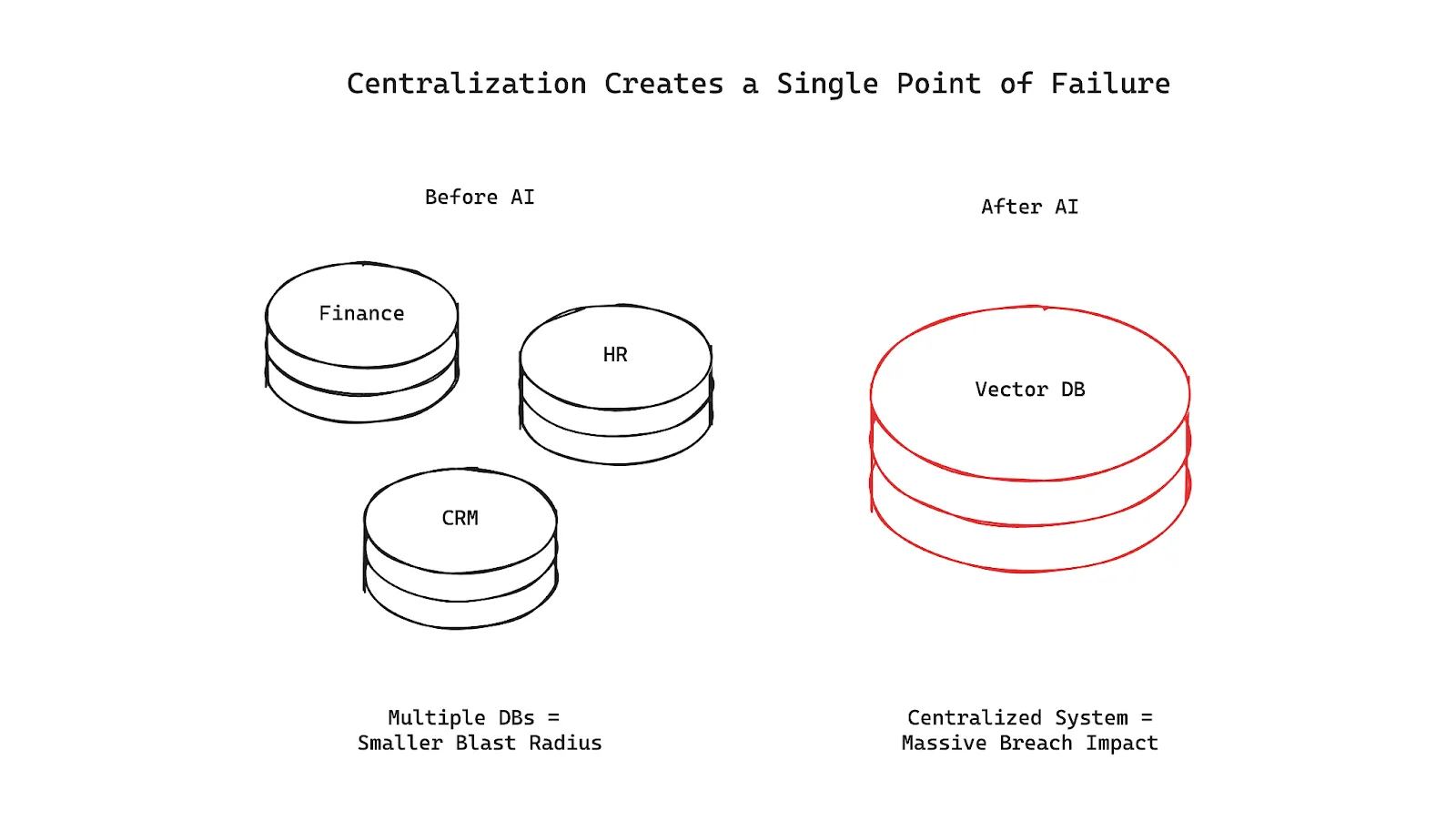
Before AI, enterprise data was fragmented. It lived across dozens - sometimes hundreds - of databases, file shares, SaaS tools, and silos. That fragmentation frustrated CIOs and CTOs who wanted faster insights, but from a security standpoint, it wasn’t all that bad.
An attacker looking to get a full picture of your organization’s knowledge had the challenge of breaching multiple systems, each with its own authentication, network controls, and audit trails. It was a grind, and that friction was on your side.
AI changes that.
Centralization: AI’s Most Overlooked Risk
Most enterprise AI applications - RAG or otherwise - work better with more data at their disposal. To make that possible, teams are centralizing data from disparate systems into a single vector database. This is required to give an LLM context-rich answers, avoid hallucinations, and unlock value from all the documents, tickets, wiki pages, and PDFs scattered across the company.
But here’s the security problem nobody’s talking about:
For the first time, there’s a single system that contains a dense, high-value cross-section of your entire organization’s data. Breach that system, and you don’t just lose one database - you potentially lose everything.
Why This Is Worse Than a Normal Database Breach
**1. The blast radius is bigger.**A traditional database breach exposes the data inside that database. A vector database breach exposes the data from every source system connected to it. Centralization multiplies the impact.
**2. Embeddings leak the original data.**Vector embeddings are dense mathematical representations of text or images. They’re not “anonymous” or “irreversible.” In fact, inversion attacks can reconstruct original content from embeddings with surprising accuracy. Cyborg recently demonstrated this live at the Confidential Computing Summit in June 2025 - watch the attack here.
**3. Standard vector databases are almost entirely unprotected.**Most offer no encryption at all. A few encrypt at rest, but almost none encrypt in use. That means embeddings and metadata sit in plaintext in memory, in caches, in query logs - exactly where attackers look first.
This Isn’t Theoretical
If you’ve followed the security industry for any length of time, you’ve seen the headlines:
- Misconfigured MongoDB instances leaking millions of records
- Elasticsearch clusters exposing sensitive customer data
- Unsecured S3 buckets full of private documents
Those were bad. But in every case, the attacker got only one dataset.
A compromised vector database in an AI application could expose dozens of datasets at once - and in a format that’s easy to misuse or reconstruct. The surface area is smaller, but the stakes are far higher.
What a Real Solution Looks Like
To eliminate this risk, a vector database needs to:
- Encrypt everything end-to-end - at rest, in transit, and in use - so no plaintext embeddings ever exist in the system.
- Isolate encryption keys with BYOK or HYOK, so you - not your vendor - control access.
- Maintain performance at scale so security doesn’t mean latency.
- Integrate with existing stacks (Postgres, Redis, cloud KMS, AI frameworks) without forcing architectural rewrites.
- Support compliance requirements like HIPAA, GDPR, and FedRAMP without bolt-ons or workarounds.
Anything less is inadequate for serious or long-term use.
Where Cyborg Fits
Cyborg has built the first and only vector database proxy that sits between your applications and your vector database, providing encryption-in-use for all vectorized data, secured with your keys, and powered by GPU-accelerated performance. Designed for broad compatibility with your existing datastores and AI frameworks, it’s a secure, high-speed foundation for centralized AI data - built into the architecture, not bolted on.
If you’re building or running enterprise AI applications, now is the time to think about this risk. The architecture shifts are already happening inside your organization. You can’t stop centralization - but you can make sure it doesn’t become your biggest breach vector.
Learn more about how Cyborg secure enterprise AI data →
For more technical details, check out our security docs.
 CYBORG
Inside CyborgDB: How End-to-End Encrypted Vector Search Works
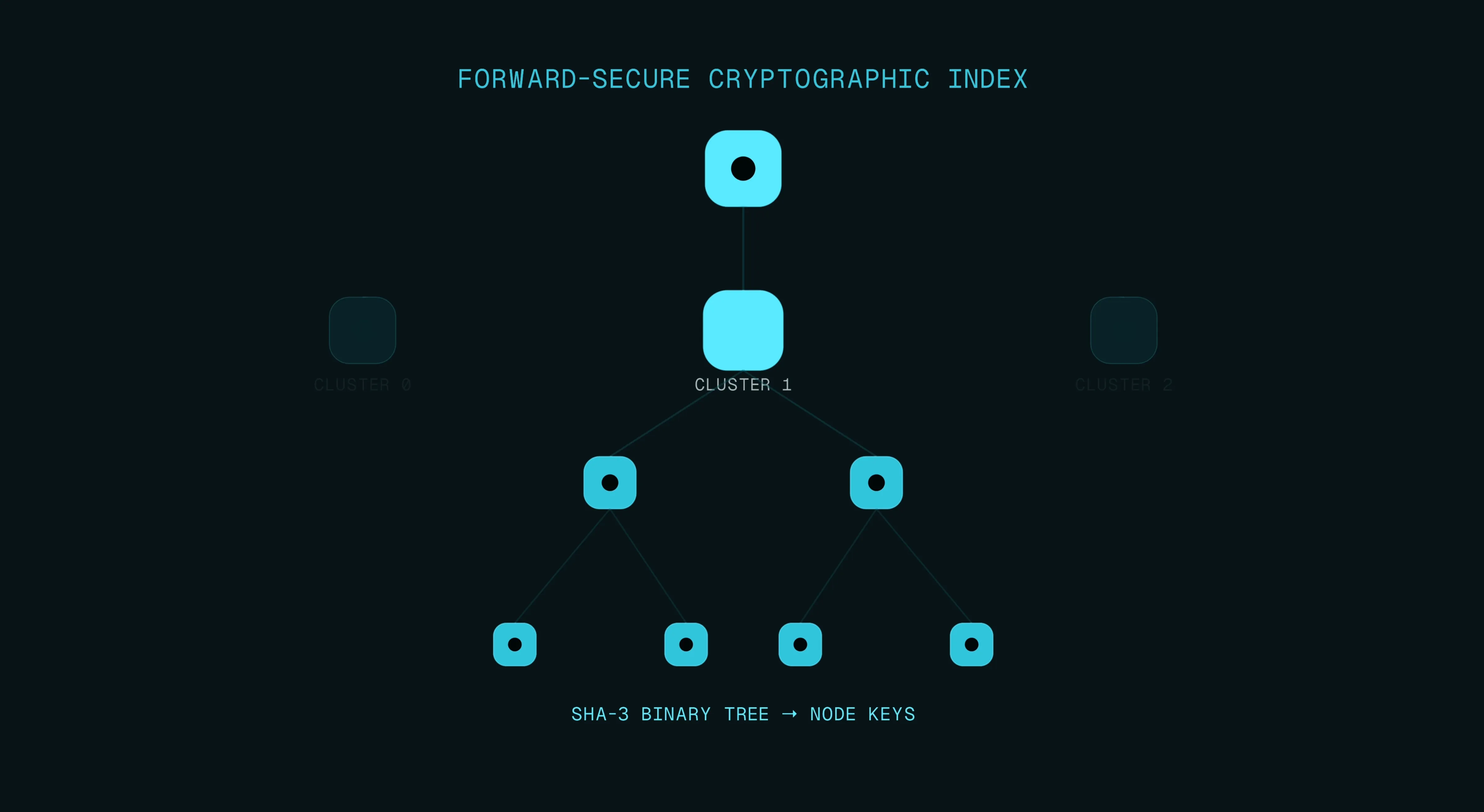
Most vector databases encrypt at rest and in transit, then decrypt to plaintext during search — exactly when the data is most exposed. CyborgDB assumes the server may be compromised. This deep-dive walks through how it maintains end-to-end encryption across the entire vector lifecycle, including during search.
 CYBORG
Embeddings Aren't One-Way: A Real Vector Database Inversion Attack
A common assumption is that embeddings are safe, abstract, and one-way. They're not. Jim Armbruster runs a live attack on a production-style RAG pipeline — reconstructing social security numbers, passwords, and medical diagnoses from embeddings stored in plaintext with near-exact accuracy.
 CYBORG
How CyborgDB Secures the AI Knowledge Layer
Modern AI runs on retrieval, so organizations centralize their most sensitive data into vector databases — making them the AI knowledge layer and a whole new class of risk. Kevin Kopczynski walks through how CyborgDB solves this architecturally, encrypting embeddings into cryptographic tokens that stay searchable while your data stays fully encrypted.